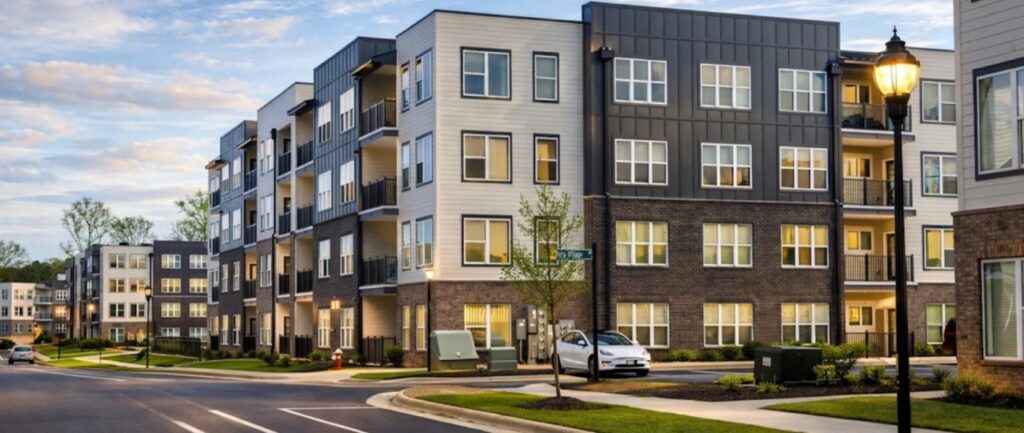
Institutional capital evaluates multifamily opportunities through two primary lenses: yield durability and risk compression. Standard development models optimize for neither. Aria Communities operates on a fundamentally different structure. We hold assets for the long term, not the transaction cycle.
The Merchant Builder Problem Most multifamily developers function as merchant builders. They acquire land, construct the project, stabilize occupancy, and exit within three to five years. This timeline dictates every decision the development team makes.
When an architect designs for a 24-month exit, the calculus is simple: minimize construction cost, meet minimum code requirements, and create a marketable product. When that same architect designs for a 15-year hold, the priorities shift entirely. Material specifications matter. Maintenance accessibility matters. Energy efficiency compounds over time.
The merchant builder’s incentives are transactional. Aria’s incentives are operational.
Vertical Integration as the Execution Mechanism Long-term ownership requires infrastructure that prevents value leakage. Aria operates as a vertically integrated developer. We control design, construction, and property operations in-house. This is our chosen mechanism to execute a multi-decade hold strategy.
When the team designing a building also constructs it and manages it for years afterward, feedback loops form that do not exist in fragmented models. Our construction team reviews architectural details knowing they will field the maintenance calls. Our property management team influences amenity design based on resident behavior patterns from properties we have operated for a decade.
Institutional knowledge compounds. The architect learns which specifications reduce long-term operating costs. The construction team understands which details create resident satisfaction. The property manager feeds operational data back into the next development cycle.
Alignment with Institutional Capital For institutional limited partners seeking stable, compounding yields, this operational model creates absolute alignment. We do not engineer exits. We engineer assets that perform across market cycles because we live with our own construction and management decisions.
The standard merchant builder optimizes for IRR over 36 months. Aria optimizes for net operating income over 15 years. That structural difference changes everything. It dictates material selection, tenant relations, and capital improvement timing.
Long-term ownership is not just a holding period. It is an operational framework that realigns every development decision toward sustained performance rather than transaction velocity.
Frequently Asked Questions
How does long-term ownership affect multifamily real estate returns? Long-term ownership shifts focus from transaction-based IRR to sustained net operating income. Developers holding assets for 15+ years prioritize operational efficiency, resident retention, and capital improvements that compound value rather than optimizing for quick exits.
What are the benefits of vertical integration in real estate development? Vertical integration creates continuous feedback loops between design, construction, and operations teams. When the same organization controls all phases, institutional knowledge compounds. Architects learn which specifications reduce maintenance costs. Construction teams understand details that improve resident satisfaction. Property managers influence design decisions based on operational data.
How does Aria Communities align with institutional investors? Aria’s long-term hold strategy creates absolute alignment with institutional capital seeking yield durability. We do not engineer exits. We engineer assets that perform across market cycles. Our vertically integrated model ensures operational decisions prioritize sustained NOI rather than transaction velocity.